
High-Protein Foods: The Best Sources and How to Eat More of Them
Protein per 100 g and per 100 calories in chicken, fish, eggs, dairy, tofu, lentils and oats, how protein builds muscle, and meals with 25 to 35 g each.
By Pierre Klasson · Last updated 17 November 2026 · Last reviewed 17 November 2026 · 23 min read
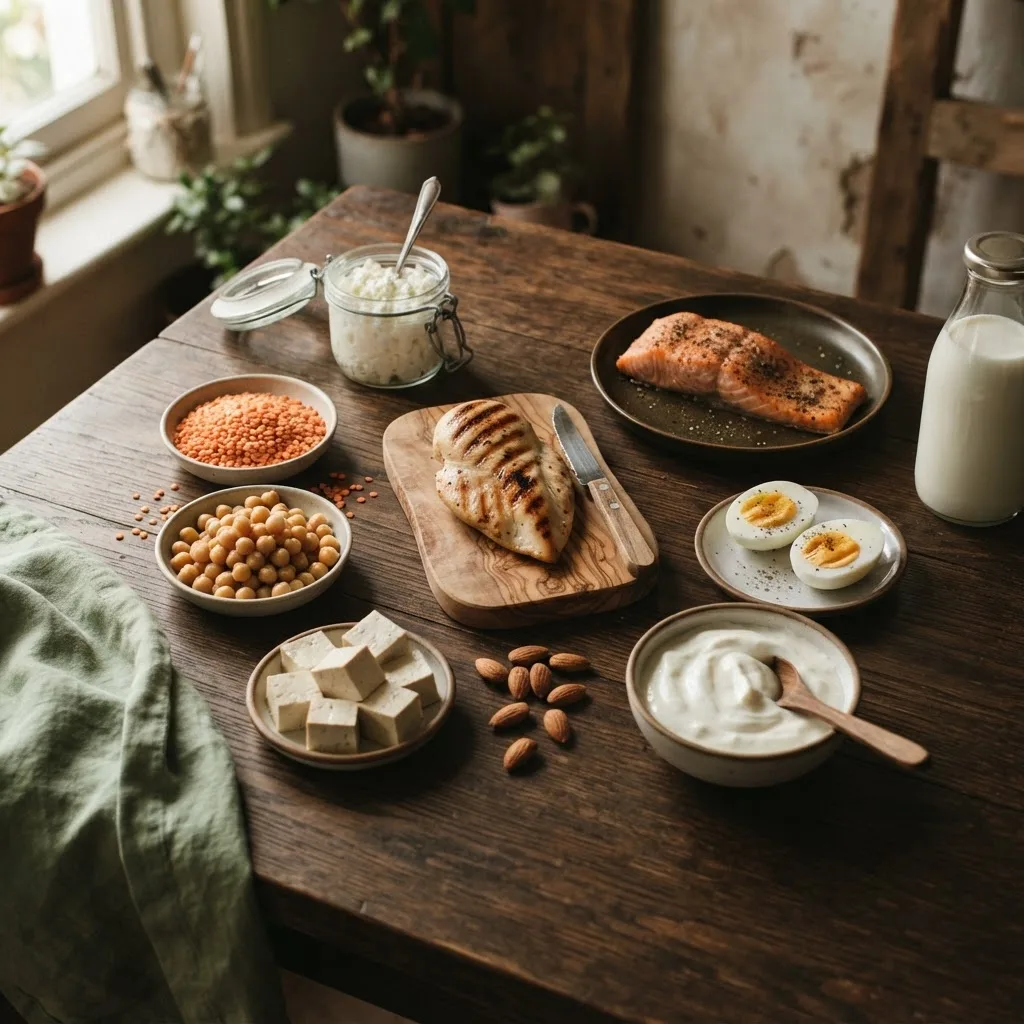
For a long time I assumed I ate plenty of protein. I lifted four times a week, I had meat with dinner most nights, and I felt like a person who knew what he was doing.
Then I logged a normal week properly. I was averaging about 60 grams a day, most of it after seven in the evening, and I was starving every afternoon. Nothing about my diet was unusual. I just had no idea where protein actually comes from, or what a useful amount looked like on a plate.
So I went through the high-protein foods I actually eat and wrote down what each one brings. The numbers are further down, plant sources included, because those were the ones I had been ignoring. The rest is the part I cared about more: getting 25 to 35 g into breakfast, lunch and dinner without eating chicken breast every day.
Best Protein Foods by Goal
If you only want names rather than numbers, start here. Every figure is per 100 g of the food as you eat it, and the table further down has the full comparison.
- Losing fat and keeping muscle: cod, prawns, tuna in water, egg whites and chicken breast all clear 18 g of protein per 100 calories. Greek yoghurt at 0% fat lands at 17, which is why the big tub stays in my fridge. Which diet you build that around matters less than the deficit itself, and the comparison of popular diets covers that trade-off.
- Eating mostly plants: tofu and tempeh first, then edamame, lentils, chickpeas and black beans, with hemp or pumpkin seeds on top. Soy gives you the most per portion, 15 to 19 g per 100 g, while the beans bring fibre that tofu does not.
- On a budget: eggs, tinned tuna, milk, lentils, cottage cheese and chicken thighs. Per gram of protein those are about the cheapest things on the shelf, and none of them need a plan.
- No cooking at all: a drained tin of tuna, a pot of Greek yoghurt, cottage cheese, a glass of milk, edamame out of the freezer, or eggs boiled in advance. My usual is yoghurt with a spoon of seeds, which is about 20 g in a minute.
The sections below explain what protein does in the body, where each number comes from, and how to get 25 to 35 g into a meal.
What Protein Actually Does in the Body
Before the numbers, it is worth knowing what your body does with the protein you eat. It is not fuel in the way a tank of petrol is. It is building material, and your body replaces parts of itself all day, every day.
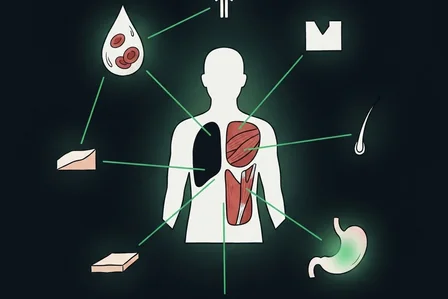 Protein is not only for muscle. It builds skin, tendon and hair, carries oxygen, makes enzymes and antibodies, and is the most filling of the three macronutrients.
Building and repair. Muscle gets the attention, but skin, the collagen in tendons and ligaments, the scaffolding inside bone, hair and nails are protein too. Training causes a little damage on purpose; the amino acids you eat are what patch it back up.
Enzymes and hormones. Almost every chemical reaction in the body is run by an enzyme, and enzymes are proteins. So are insulin, growth hormone and the thyroid hormones. Without the raw material, none of that runs the way it should.
Carrying oxygen and nutrients. Haemoglobin is a protein, and it moves oxygen from your lungs to your legs. Lipoproteins carry cholesterol, and other proteins decide what gets in and out of a cell.
Immunity. Antibodies are proteins. Older adults notice this first: too little protein for too long and recovery from illness slows down while muscle goes faster, so the advice for over-65s moves up rather than down.
Fullness. Protein is the most filling of the three macronutrients, and digesting it costs more energy than digesting fat or carbohydrate, with roughly 20 to 30% of those calories burned off on the way. A high-protein breakfast holds far better than a bowl of cereal.
Energy, if it comes to that. Burning protein is the last resort, not the normal supply. Your body can turn amino acids into glucose when it needs to, and if you eat far too little it takes what it needs out of muscle.
The catch is that nothing is stored for later. Fat you can lay down and draw on weeks later. Protein has no equivalent. Your body recycles a few hundred grams of its own protein a day, but the spare pool of amino acids is small, so what you eat today is largely what gets used today. That is the practical case for eating enough of it and spreading it across meals.
How Protein Actually Builds Muscle
Lifting a weight does not build muscle. It asks for muscle, and the asking is the part people skip. A hard set does a little damage to the fibres and sends a signal that this needs to be stronger next time. Protein is the material that answers it. Neither half does much alone. Eat 180 g of protein a day and never train, and you will not add much muscle. Train four times a week on 50 g a day and you will mostly spin your wheels.
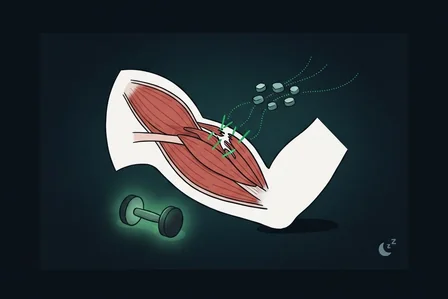 The set is the signal and the protein is the material. The repair itself happens later, while you eat and sleep.
What happens after a session. Two things run at once. Your body breaks down a bit of muscle protein and builds new protein in its place, and muscle grows when the building outpaces the breaking. A solid portion of protein, roughly 25 to 40 g, lifts the building side for about three hours, then it settles back down. That is the reason behind eating protein at several meals instead of loading it all into dinner: each portion buys another few hours of building, and the small additions stack up over months.
More protein is not a bigger muscle. Once you are eating enough, extra protein gets burned for energy or stored as fat. It does not get bolted onto your arms. What raises the ceiling is training harder over time.
Where muscle quietly goes. Most people lose muscle without noticing, and it is not a bodybuilding problem. It goes in a calorie deficit, in a week of bed rest, and with age: from around your thirties you slowly lose muscle if you don't use it, and the drop steepens the longer nothing loads it. The fix is the same pair every time, enough protein plus something that loads the muscle. The training half of that is in how to gain muscle.
Why it is worth more than mirror muscle. Muscle is where most of your blood sugar goes after a meal. It pulls on bone and keeps it dense. It is what gets you up the stairs and off the floor at 80. That is the case for lifting twice a week and eating protein at every meal, and none of it depends on wanting to look different.
The practical version is short: two or three resistance sessions a week, 25 to 40 g of protein at each meal, and enough sleep to actually repair. When I first logged my food I was lifting four times a week on about 60 g a day and going nowhere. Nothing about my training changed over the following months except the food, and the bar started moving.
How Much Protein Do You Actually Need?
The official minimum for adults sits around 0.75 to 0.8 g per kilogram of body weight a day. That is the amount that stops you wasting away, not the amount that helps you train, recover or stay full.
If you are active, the range most researchers land on is 1.6 to 2.2 g per kg per day. That comes from the International Society of Sports Nutrition's position stand on protein and exercise, and the muscle-building benefit tends to level off around 1.6 g per kg, as a meta-analysis in the British Journal of Sports Medicine found. Going higher than that mainly helps people who are lean, dieting and training hard.
For a 75 kg person that works out at roughly 120 to 165 g a day. For a 60 kg person, around 96 to 132 g.
Two groups need a different number. Older adults do better at the higher end, nearer 1.0 to 1.2 g per kg, because ageing muscles respond less well to the same amount, which is what the PROT-AGE recommendations set out. And anyone in a calorie deficit should keep protein high, since it is the main thing protecting muscle while you lose fat.
A rough daily range by body weight
- 55 kg: 88 to 120 g
- 65 kg: 104 to 143 g
- 75 kg: 120 to 165 g
- 85 kg: 136 to 187 g
- 95 kg: 152 to 210 g
Those assume you train a few times a week. If you do not, the bottom of each range is plenty, and about 0.8 g per kg is still the floor worth clearing.
📊 Protein calculator
120–165 g protein per day
About 30–41 g per meal over four meals.
If you are much heavier or lighter than the examples
Protein needs scale with lean mass more than with total body weight. If you carry a lot of body fat, work from a target weight rather than today's reading, otherwise the number comes out high and hard to eat. If you are light, the ranges still apply, but the per-meal dose shrinks: 20 to 25 g is a full portion rather than 35.
How much you get at each meal. This is the number people skip. We eat almost nothing at breakfast, a sandwich at lunch and then 50 g at dinner. Four meals with 25 to 35 g each will do more for you than one enormous evening portion.
Does protein timing matter?
Total daily protein matters most, but when you eat it is not irrelevant. Muscle protein synthesis responds best to roughly 0.4 g per kg at a time, which for most people is 25 to 40 g, and it stays raised for about three hours afterwards. Three or four of those across the day beats one enormous dinner.
The 30-minute post-workout window is far wider than the gym myths make out. Eating anywhere from a couple of hours before training to a few hours after is fine, so a shake can wait until you have had a proper meal. What does not work is skipping breakfast and trying to make it up at nine at night.
Protein per 100 g: The Comparison Table
Every food database compares foods per 100 g, so that is where we start. The last two columns are the ones I use most: what a real portion gives you, and how much protein you get per 100 calories.
How these numbers were put together
- Cooked, unless the row says otherwise. Meat, fish, lentils and chickpeas are weighed after cooking, because that is what ends up on your plate. Cooking drives water off and concentrates the protein, so cooked chicken reads higher than the raw weight on the packet. Oats, seeds and protein powder are dry; eggs and dairy are as sold.
- Rounded. Protein to the nearest gram, calories to the nearest 5. Breed, cut, brand and cooking time move the real figure by a few percent, so read every row as "about".
- Portions are ordinary ones. 150 g of chicken or fish, a 170 g pot of yoghurt, a drained 120 g tin of tuna, a 125 g portion of mince. A bigger or smaller portion moves the last column with it.
- Sources. Rounded averages from USDA FoodData Central and the Swedish Food Agency's food database. Both publish full nutrient panels per 100 g of the food as eaten, and both are national reference values rather than brand data.
And it is a comparison, not a ranking. Sorting by protein per 100 g rewards dry, dense foods and punishes anything watery, which tells you nothing about whether a food is good for you. A tin of tuna beats a bowl of lentils here and loses to it on fibre, salt and price. Use the columns to see what a food brings, then decide what your plate needs.
| Food (as eaten) | Protein per 100 g | kcal per 100 g | Protein per 100 kcal | Typical portion | Protein in that portion |
|---|---|---|---|---|---|
| Meat and fish | |||||
| Chicken breast, cooked, skinless | 31 g | 165 | 19 g | 150 g | 47 g |
| Turkey breast, cooked | 29 g | 135 | 21 g | 150 g | 44 g |
| Lean beef mince (5% fat), cooked | 26 g | 215 | 12 g | 125 g | 33 g |
| Chicken thigh, cooked, skinless | 26 g | 209 | 12 g | 120 g | 31 g |
| Tuna, canned in water, drained | 26 g | 115 | 23 g | 120 g | 31 g |
| Salmon, cooked | 22 g | 206 | 11 g | 150 g fillet | 33 g |
| Prawns, cooked | 24 g | 99 | 24 g | 100 g | 24 g |
| Cod, cooked | 23 g | 105 | 22 g | 150 g fillet | 35 g |
| Eggs and dairy | |||||
| Eggs, whole | 13 g | 143 | 9 g | 2 large (100 g) | 13 g |
| Egg whites | 11 g | 52 | 21 g | 3 whites (100 g) | 11 g |
| Greek yoghurt, 0% fat | 10 g | 59 | 17 g | 170 g pot | 17 g |
| Skyr or quark, plain | 11 g | 63 | 17 g | 150 g | 17 g |
| Cottage cheese | 11 g | 98 | 11 g | 100 g | 11 g |
| Cheddar | 25 g | 403 | 6 g | 30 g | 8 g |
| Semi-skimmed milk (per 100 ml) | 3.5 g | 47 | 7 g | 250 ml glass | 9 g |
| Whey protein powder | 80 g | 400 | 20 g | 30 g scoop | 24 g |
| Plant proteins | |||||
| Tofu, firm | 15 g | 144 | 10 g | 150 g | 23 g |
| Tempeh | 19 g | 192 | 10 g | 100 g | 19 g |
| Seitan, cooked | 25 g | 150 | 17 g | 100 g | 25 g |
| Edamame beans | 11 g | 121 | 9 g | 100 g | 11 g |
| Soy mince (TVP), dry | 50 g | 330 | 15 g | 30 g dry | 15 g |
| Lentils, cooked | 9 g | 116 | 8 g | 150 g | 14 g |
| Chickpeas, cooked | 9 g | 164 | 5 g | 150 g | 14 g |
| Black beans, cooked | 9 g | 132 | 7 g | 150 g | 14 g |
| Green peas, cooked | 5 g | 81 | 6 g | 80 g | 4 g |
| Broccoli, cooked | 2.8 g | 34 | 8 g | 80 g | 2 g |
| Nuts, seeds and grains | |||||
| Hemp seeds | 32 g | 553 | 6 g | 30 g (3 tbsp) | 10 g |
| Pumpkin seeds | 30 g | 559 | 5 g | 20 g | 6 g |
| Peanut butter | 25 g | 588 | 4 g | 1 tbsp (16 g) | 4 g |
| Almonds | 21 g | 579 | 4 g | 30 g handful | 6 g |
| Oats, dry | 13 g | 389 | 3 g | 40 g | 5 g |
Chicken breast lands at about 31 g per 100 g, cod 23, tofu 15, Greek yoghurt 10 and cooked lentils 9. That spread is why a big bowl of lentil soup leaves you less stocked in protein than a chicken salad half its size.
Water content: raw chicken breast looks weaker on paper, around 23 g per 100 g, because it is about three quarters water. Cook it and the water leaves, so the protein concentrates to about 31 g per 100 g, which is the figure in the table. Cooked lentils are mostly water too, which is why their number looks low even though they are a genuine protein food.
Protein per 100 calories: the reality check. Cheddar has more protein per 100 g than cod does, but less than a third as much per calorie. If you are dieting, you are really shopping for low calorie high protein foods, and this is the column that finds them.
If you would rather search than scan, this is the interactive version of the same list: filter it by category or sort it by protein per calorie.
🍗 High-protein food database
| Food | Protein / 100 g | kcal / 100 g |
|---|---|---|
| Whey protein powderSupplements | 80 g | 400 |
| Pea protein powderSupplements | 80 g | 390 |
| Casein protein powderSupplements | 78 g | 370 |
| Spirulina (dried)Plant | 57 g | 290 |
| Soy mince (TVP), dryPlant | 50 g | 330 |
| Nutritional yeastPlant | 50 g | 325 |
| ParmesanDairy & eggs | 35 g | 431 |
| Beef jerkyMeat | 33 g | 410 |
| Hemp seedsPlant | 32 g | 553 |
| Chicken breast (cooked)Meat | 31 g | 165 |
| Pumpkin seedsPlant | 30 g | 559 |
| Venison (cooked)Meat | 30 g | 158 |
| Protein bar (typical)Supplements | 30 g | 360 |
| Turkey breast (cooked)Meat | 29 g | 135 |
| Beef steak, sirloin (cooked)Meat | 29 g | 206 |
| Lamb (lean, cooked)Meat | 27 g | 230 |
| Lean beef mince (cooked)Meat | 26 g | 215 |
| Pork tenderloin (cooked)Meat | 26 g | 145 |
| Tuna (canned in water)Fish | 26 g | 115 |
| Chicken thigh (cooked)Meat | 26 g | 209 |
| Tilapia (cooked)Fish | 26 g | 128 |
| PeanutsPlant | 26 g | 567 |
| Seitan (cooked)Plant | 25 g | 150 |
| Peanut butterPlant | 25 g | 588 |
| Sardines (canned)Fish | 25 g | 208 |
| CheddarDairy & eggs | 25 g | 403 |
| Shrimp (cooked)Fish | 24 g | 99 |
| Chicken liver (cooked)Meat | 24 g | 167 |
| Mackerel (cooked)Fish | 24 g | 262 |
| Trout (cooked)Fish | 24 g | 168 |
| Mussels (cooked)Fish | 24 g | 172 |
| Mozzarella (light)Dairy & eggs | 24 g | 254 |
| Cod (cooked)Fish | 23 g | 105 |
| Canned salmonFish | 23 g | 140 |
| Salmon (cooked)Fish | 22 g | 206 |
| HalloumiDairy & eggs | 22 g | 321 |
| AlmondsPlant | 21 g | 579 |
| Ham (lean, sliced)Meat | 21 g | 120 |
| Sunflower seedsPlant | 21 g | 584 |
| TempehPlant | 19 g | 192 |
| Crab (cooked)Fish | 19 g | 97 |
| Smoked salmonFish | 18 g | 117 |
| CashewsPlant | 18 g | 553 |
| Chia seedsPlant | 17 g | 486 |
| Tofu (firm)Plant | 15 g | 144 |
| FetaDairy & eggs | 14 g | 264 |
| EggsDairy & eggs | 13 g | 143 |
| OatsPlant | 13 g | 389 |
| Egg whitesDairy & eggs | 11 g | 52 |
| Cottage cheeseDairy & eggs | 11 g | 98 |
| Quark / skyrDairy & eggs | 11 g | 63 |
| EdamamePlant | 11 g | 121 |
| Greek yogurt (0%)Dairy & eggs | 10 g | 59 |
| Protein puddingDairy & eggs | 10 g | 75 |
| Lentils (cooked)Plant | 9 g | 116 |
| Chickpeas (cooked)Plant | 9 g | 164 |
| Black beans (cooked)Plant | 9 g | 132 |
| Kidney beans (cooked)Plant | 9 g | 127 |
| Wholemeal pasta (cooked)Plant | 5.5 g | 149 |
| Green peasPlant | 5 g | 81 |
| Quinoa (cooked)Plant | 4.4 g | 120 |
| Milk (semi-skimmed)Dairy & eggs | 3.5 g | 47 |
| KefirDairy & eggs | 3.5 g | 55 |
| Soy milkPlant | 3.3 g | 54 |
| BroccoliPlant | 2.8 g | 34 |
Typical values. Check the label of your product for exact numbers.
Why Protein per 100 g Is Only Half the Story
I fell for this one early on. I found a list of the best protein foods, saw seeds and cheese at the top, and concluded I was sorted. I was not. I was eating a lot of fat with a side of protein, and my calories climbed faster than my protein did.
What the number cannot tell you is what eating it actually looks like. Nobody has 100 g of peanut butter; they have a tablespoon, which is 4 g of protein, while 150 g of chicken is an ordinary dinner.
Fillingness does not follow the same order either. Protein, fibre and water all help, and lentils bring fibre that chicken does not, so 14 g from a bowl of lentils can hold you longer than 14 g from a slice of ham.
Then there is what arrives with the protein. Processed meat brings salt and saturated fat, cheese brings a lot of fat. Neither is off the table, but if protein is what you are after, they are expensive ways to get it.
So compare foods by the 100 g number, then plan the meal with portions and calories in view.
The Best Animal Sources
Meat and poultry
Chicken breast, turkey, lean beef mince and pork tenderloin all land between 26 and 31 g of protein per 100 g cooked. A 120 to 150 g piece gives you 30 to 45 g, most of a meal's target from a single item.
Chicken thighs are only slightly behind breast, 26 g per 100 g, and much harder to overcook. I cook them most weeks. Lean mince at 5% fat is the one I keep in the freezer for quick dinners.
Cut matters as much as the animal. The same beef mince can be 5% or 20% fat depending on the pack, which is roughly 175 or 270 calories per 100 g. Read the label once, then buy the same thing every week and stop thinking about it.
Turkey breast is the leanest of the lot at 29 g per 100 g for about 135 calories, and it dries out fast, so keep it in a traybake with something wet or slice it for sandwiches. Pork tenderloin is the underrated one: about 26 g per 100 g cooked for around 140 calories, and it is done in fifteen minutes.
The NHS guidance on meat is worth reading if you eat a lot of red and processed meat. Protein is not the limiting factor there.
Ham, bacon, salami and sausages are the same protein carrying a lot of salt and saturated fat. Make them the exception, not the way you hit your target every day.
Fish and seafood
Tuna canned in water is the most useful protein in my kitchen: 26 g per 100 g, no cooking, and it keeps for years. Cod is even leaner at 23 g per 100 g for around 105 calories. Salmon sits at 22 g with more fat, which makes it filling and forgiving in the pan.
Prawns get overlooked: 24 g per 100 g for about 99 calories, and three minutes in a hot pan.
Oily fish is worth eating twice a week for the omega-3s rather than the protein: salmon, mackerel, sardines, herring. White fish such as cod, haddock and pollock is the lean end of the counter and the easiest thing to eat in a calorie deficit. Tinned sardines in tomato sauce come in at about 20 g of protein per 100 g for around 190 calories, and they cost less than a coffee.
Smoked fish is convenient but salty, so treat smoked salmon and smoked mackerel as flavour rather than a daily protein source. Frozen prawns and frozen white fish are usually cheaper than the fresh counter and every bit as good.
Eggs
A large egg is about 13 g of protein per 100 g, which works out at roughly 6 to 7 g per egg. Two eggs on toast gets you 13 g before the bread. Egg whites are almost pure protein, 11 g per 100 g with very few calories, useful if you want the protein without the fat.
Eggs have had a rougher reputation than they deserve. For most people the cholesterol in them has little effect on blood cholesterol, and what sits next to them on the plate (butter, cheese, bacon) matters more. If you have familial high cholesterol or diabetes, that is a question for your doctor rather than a food article.
Dairy
Dairy is the least effort of the lot. Greek yoghurt at 0% fat is 10 g per 100 g, so a 170 g pot gives you 17 g. Skyr and quark are similar. Cottage cheese is 11 g per 100 g and takes salt and pepper well.
Skyr, quark and Icelandic-style yoghurt sit a little higher than Greek at 10 to 11 g per 100 g, and thinner unless you buy the full-fat version. Read the flavoured pots before you commit: some carry 12 g of sugar per 100 g, which makes them a dessert with protein in it.
Milk is modest per 100 ml, about 3.5 g, but a 250 ml glass is 9 g, and it goes into porridge and coffee without you noticing. Cheese is a fat food with protein attached: good for flavour, poor as your main source.
The Best Plant Sources
Plant sources give you less per portion, so they need a bit more thought about what else is on the plate.
Plants are not short of protein, it is just packaged differently. Most plant proteins are lower in one or two essential amino acids (lysine in grains, methionine in legumes) and slightly less digestible, so the usable amount comes out a little below the label. The fix is small: aim 10 to 20% higher than your target and vary the sources across the day instead of leaning on one.
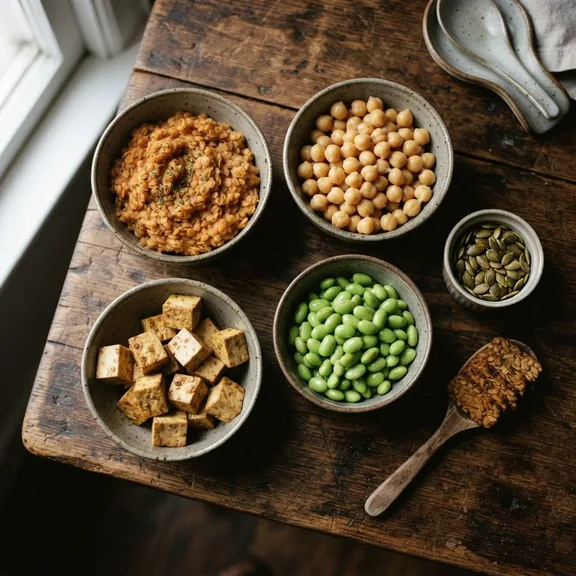 Lentils, chickpeas, tofu and edamame: four plant foods that carry a meal's protein.
Legumes
Lentils, chickpeas, black beans and kidney beans sit around 9 g per 100 g cooked. That sounds low next to chicken, but a 150 g serving is 14 g, and it comes with fibre that chicken does not have. Add them to a bolognese, a curry or a salad and the protein roughly doubles. Tinned ones are fine, and rinsing them in a sieve washes off a good part of the salt.
Soy foods
Tofu is 15 g per 100 g, tempeh 19 g, edamame 11 g, and soy milk about 3.3 g per 100 ml. Soy is also a complete protein, one of the few plant foods that stands on its own. Firm tofu, pressed and pan-fried, is the closest thing to a direct swap for chicken in a stir fry.
Soy attracts more suspicion than the evidence supports. The scare stories came from animal studies at doses nobody eats, and human trials have not reproduced the effects soy was blamed for. Two or three servings a day is a normal amount in Japan, and has been for centuries.
Other plant options worth knowing
- Seitan: 25 g per 100 g cooked, made from wheat gluten, and the closest plant food to meat in texture. No use to you if you avoid gluten.
- Soy mince, also sold as TVP: about 50 g per 100 g dry, rehydrated in stock in ten minutes. Swap half the beef in a bolognese and nobody notices.
- Pea or lupin pasta: 20 to 25 g per 100 g dry according to the packet, and it tastes like pasta rather than like a health food.
Seeds and nuts
Hemp seeds hit 32 g per 100 g, pumpkin seeds 30 g, almonds 21 g and peanut butter 25 g. But look at the calories: these are 550 to 590 kcal per 100 g. A 20 to 30 g sprinkle is a realistic portion and gives you 5 to 10 g. Useful for topping, not for building a meal around.
Grains, bread and vegetables
Oats are 13 g per 100 g dry, but a 40 g portion is 5 g. Wholemeal bread is around 9 to 13 g per 100 g, so two slices give you about 9 g. Green peas are 5 g per 100 g, broccoli under 3 g. Vegetables are not protein foods, and pretending otherwise leaves people short.
If you eat mostly plants, two habits cover the gaps: aim for the upper end of your protein range, and mix sources across the day so the amino acids complement each other. Lentils with rice, beans on toast, tofu with noodles. You do not need to obsess over combining at every single meal.
High-Protein Breakfasts That Keep You Full
This is where most people lose 30 g without noticing. A bowl of cereal and a coffee is about 8 g, and by eleven you are hunting for biscuits.
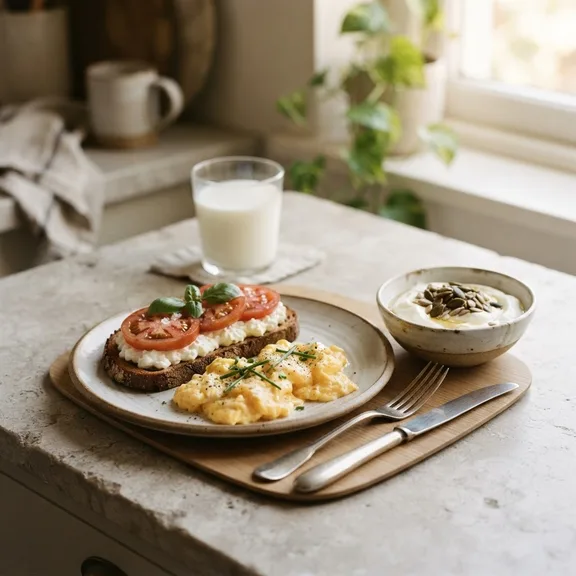 Eggs, cottage cheese on rye and a bowl of yoghurt: about 40 g of protein before nine in the morning.
Four that I actually make:
Eggs on rye. Two eggs scrambled (13 g), two slices of rye with cottage cheese (11 g). Around 25 g in five minutes.
Overnight oats with skyr. 50 g oats (6 g), 150 g skyr (17 g), a spoon of seeds (3 g). About 26 g, made the night before.
Porridge with milk. 50 g oats cooked in 250 ml semi-skimmed milk, which is 15 g together, plus a tablespoon of peanut butter for 4 g more. Around 19 g, and it keeps me going until lunch.
Tuna or salmon on toast. A tin of tuna (31 g) mixed with yoghurt instead of mayonnaise on two slices of bread (9 g). About 40 g, and it takes three minutes.
If you genuinely cannot eat in the morning, a glass of milk and a boiled egg is 15 g and takes no thought at all.
High-Protein Lunches and Dinners
The formula I use is boring and effective: one clear protein, one carb, a lot of vegetables, a sauce.
- Chicken and rice bowl: 150 g chicken (47 g), 180 g cooked rice, broccoli, yoghurt and lemon sauce. About 50 g protein.
- Salmon traybake: a 150 g fillet (33 g) with potatoes and green beans in one oven dish. About 35 g.
- Lentil and feta salad: 200 g cooked lentils (18 g), 50 g feta (7 g), tomato, cucumber, olive oil. About 25 g and a lot of fibre.
- Tofu stir fry: 150 g firm tofu (23 g), noodles, pak choi, edamame (5 g), soy and ginger. About 30 g.
- Beef mince bolognese: 125 g lean mince (33 g) with a tin of lentils in the sauce (9 g). About 40 g, and nobody notices the lentils.
- Jacket potato with tuna: a large potato, a whole tin of tuna (31 g), a spoon of yoghurt, salad. About 33 g.
Lunch and dinner templates that need no recipe
The bowl. 150 g of any protein (chicken, tofu, prawns, tinned fish), a fistful of rice or potatoes, two fists of vegetables, and a sauce built on yoghurt, lemon and mustard. 35 to 45 g.
The traybake. One protein, potatoes and vegetables on a single tray with olive oil and salt, 25 minutes at 200°C. Salmon, chicken thighs, halloumi or firm tofu all work. 30 to 40 g.
The substantial salad. Leaves, a tin of lentils or beans, a boiled egg or two, and something salty like feta or anchovies. 25 to 30 g in ten minutes.
The loaded jacket potato. Tuna, cottage cheese, leftover chilli, or beans with grated cheese. 25 to 35 g.
Whichever you cook, cook twice as much. Tomorrow's lunch is the meal people most often fail to plan, and it is the one that quietly undoes a good week.
Snacks that actually carry protein
The snacks worth keeping in the fridge are dull ones, and that is the point.
- A pot of Greek yoghurt with a spoon of seeds: 20 g
- Two boiled eggs and a glass of milk: 22 g
- Cottage cheese on rye: 15 g
- Tuna straight from the tin, on crackers: 31 g
- Edamame from the freezer with salt: 11 g per 100 g
- Roasted chickpeas: 8 g per 100 g, and they keep for a week
Most people's protein problem is not dinner. It is the hours in between, when the honest option is a biscuit.
Easy Ways to Add Protein to Meals You Already Eat
You do not need new recipes. You need small upgrades to the ones you already cook. These are the swaps that stuck for me:
- Swap the cooking water for milk in porridge. Adds about 8 g and nobody can taste the difference.
- Keep a tub of Greek yoghurt where the sour cream or crème fraîche used to be. Same job, three times the protein.
- Add a tin of lentils or beans to any mince dish, curry or soup. Roughly 9 g per 100 g and it stretches the meal.
- Put an egg on it. Fried, boiled, poached. Any leftovers, any salad, any bowl of rice.
- Use edamame instead of peas in the freezer. 11 g per 100 g against 5 g.
- Buy cottage cheese again. It went out of fashion and it should not have. 11 g per 100 g, and it works on toast, in scrambled eggs or with fruit.
- Swap half the pasta for lentils in a bake. Barely noticeable, much more protein and fibre.
Do You Need Protein Powder?
No. It is convenient, it is cheap per gram of protein, and it is genuinely useful if you cannot face another egg. But a scoop of whey is 24 g of protein for around 120 calories, and so is a pot of skyr plus a glass of milk.
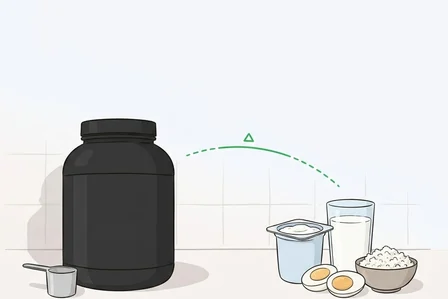 A scoop of whey on one side, a pot of skyr with milk and eggs on the other. Same protein, and only one of them needs a shaker.
Where powder earns its place is in the twenty minutes after training when you have nothing else, or in a breakfast you would otherwise skip. What it does not do is build muscle by itself. Total daily protein and hard training do that.
Common Mistakes
I have made all of these.
Saving protein for dinner. Your body does not store a day's worth for later. Spread it out.
Treating nuts and cheese as protein foods. They are fat foods with protein in them. Fine in a meal, misleading as your main source.
Assuming plants do not count. They count, just lower and slower. Eat a bit more and mix them.
Living on processed meat. Ham, salami and sausages are protein with a lot of salt and saturated fat attached. Keep them occasional.
Going high-protein and low-fibre. More meat and fewer plants is a recipe for constipation. Keep the vegetables, beans and fruit in.
Chasing a number instead of a habit. Hitting 160 g one day and 50 g the next averages out to something unremarkable. Consistency beats precision.
Is There Such a Thing as Too Much Protein?
The answer depends on whose kidneys we are talking about, and that distinction is usually missing from both the gym advice and the scare headlines.
In healthy adults, the evidence does not show harm. The best summary of it is a systematic review and meta-analysis in the Journal of Nutrition, which pooled trials comparing higher-protein intakes (at least 1.5 g per kg, or at least 20% of energy) with normal or lower ones. The change in glomerular filtration rate, the main measure of kidney function, did not differ between the groups. Higher protein did produce higher filtration rates at the end of the trials, which is the normal response to eating protein, but it did not change kidney function over time.
That is reassuring, not unlimited. Two limits are worth saying plainly. "Healthy adults" is a condition of the evidence: the participants had normal kidney function, and people with reduced function were excluded. And most of those trials ran for weeks to a few months, so they tell you a lot about a year of higher protein and rather little about thirty years of it. Nothing in the data suggests a problem. Nothing in the data proves the far future either.
In kidney disease, the advice reverses. Where kidney function is already reduced, protein is not something to push up but something to control. Guidance generally sits at around 0.8 g per kg a day for adults with chronic kidney disease who are not on dialysis, with lower intakes sometimes used under supervision, as reviews such as Ko and colleagues on dietary protein and chronic kidney disease set out. The NHS material on kidney disease is a sensible place to start reading. A number from a fitness article is the wrong input here; your nephrologist or a renal dietitian sets it.
More is not automatically better anyway. Beyond about 1.6 g per kg a day, extra protein does little for muscle if you are already training, and very high intakes tend to crowd out fibre, fruit and vegetables. Where the protein comes from matters too: 150 g a day built on fish, eggs, dairy and beans looks different from the same number built on salami.
Who Should Be Careful
- Chronic kidney disease, a single kidney, or a transplant: your protein target is a medical decision and is usually lower rather than higher. It should come from your nephrologist or a renal dietitian.
- Kidney function you have never had checked: if you have diabetes, high blood pressure or a family history of kidney disease, have it tested before you make a high-protein diet your routine. A blood test settles it.
- Pregnancy and breastfeeding: protein needs do rise, but they are individual. Follow your midwife or doctor's advice rather than a fitness article.
- Older adults with a poor appetite: protein at every meal matters more than the exact number, and a dietitian can help if eating is difficult.
- Teenagers: needs depend on growth and should be handled with a doctor or dietitian.
- Anyone with a history of disordered eating: counting and tracking macros can become rigid and harmful. If numbers around food make you anxious, step away from them.
How to Check Your Own Intake
Pick a normal week, not a perfect one, and log what you eat without changing anything. Then look at two things: your daily total, and how it is spread across meals.
I use Navilo Health for this because photographing a plate takes a few seconds, and the app lists the protein in each item so I can see where a day fell short. A photo scan is one of the AI features that runs on credits, and the credit guide lists what each scan costs. When I first did it, the answer was obvious within two days: nothing before lunch, and no protein in any snack.
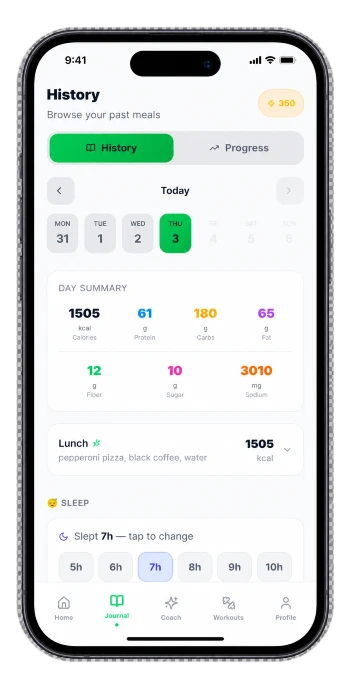
Two seconds per meal
A photo is enough. The day adds itself up.
That screen is my Thursday. Lunch went in as one photo of a pizza, the rest took a few taps, and the card at the top kept the running total: calories, protein, carbs and fat first, then fibre, sugar and sodium underneath. By eight in the evening I can see whether I still need protein or whether I am already there, without adding anything up myself.
No spreadsheet, no scrolling a list of a thousand foods, no guessing what a portion weighed. Pick any day in the strip and the whole day is there, which is how you find out what a normal Tuesday actually looks like instead of what you think it looks like.
Start tracking freeIf you want the numbers behind the food, the guide to calories in common foods breaks down everyday portions, and the muscle-building guide covers how much protein actually goes into gaining muscle. If you are dieting, the weight loss guide explains why keeping protein high matters even more in a deficit, and counting calories from photos shows how to log it without weighing everything.
If you would rather not sign up for anything, the rest of the free health tools run in the browser and cover calories, BMI, body fat and waist-to-height. If you are choosing an app instead of a food, how Navilo compares with MyFitnessPal covers the tracking side, and the guide to AI food trackers explains what to check before you commit to one.
What I'd Tell a Friend
Eat protein at every meal, not just at dinner. Keep eggs, Greek yoghurt, tinned fish, lentils and tofu in the house, because the foods in your kitchen are the ones you eat.
You do not need a perfect number. You need 25 to 35 g at breakfast, a similar amount at lunch and dinner, and something with protein in it when you get hungry at four o'clock. That is it.
This article is general information, not medical advice. If you have a kidney condition, are pregnant or take regular medication, speak to a doctor or dietitian before making big changes to your protein intake.
Frequently asked questions
Which food has the most protein per 100 g?
Dried and powdered foods win, because they have almost no water in them: whey powder is about 80 g of protein per 100 g, dried soy mince about 50 g and hemp seeds about 32 g. Among foods you eat as a portion, cooked chicken breast is around 31 g per 100 g and cooked tuna around 26 g. These numbers say more about water content than about how useful a food is, which is why the per-calorie column is worth looking at too.
How much protein is in 100 g of chicken breast?
About 31 g when cooked and skinless, roughly 23 g when raw. Cooking removes water, so the same piece of chicken weighs less and looks more protein-dense afterwards. A cooked breast of 150 g gives you around 47 g of protein for about 250 calories.
Is 100 g of protein a day too much?
For most healthy adults it is fine. A 70 kg person training regularly may need somewhere between 112 and 154 g a day, so 100 g is not extreme. It is a lot to fit into two meals though, which is why spreading it across three or four meals usually works better than chasing a big number at dinner.
Does protein build muscle without training?
No. Protein is the raw material, but resistance training is the signal that tells your body to use it. Eating more protein while never lifting mostly means the extra is burned for energy. The pair that works is training hard enough to matter and eating 1.6 to 2.2 g per kg a day, spread across three or four meals.
Do plant proteins count the same as animal proteins?
They count, but they are usually lower in one or more essential amino acids and are digested slightly less efficiently. Two practical responses: eat a bit more overall, and mix sources through the day, like lentils with rice, beans with bread, or tofu with grains. Soy foods are the exception, since soy is a complete protein on its own.
Do I need protein powder?
No. It is convenient and cheap per gram of protein, and useful if you struggle to hit your target with food. But a yoghurt, a couple of eggs or a tin of tuna does the same job. Powder is a food, not a shortcut.
Are nuts and cheese good protein sources?
They have protein, but they are fat foods first. Cheddar is about 25 g of protein per 100 g but over 400 calories, so it gives you around 6 g of protein per 100 calories. Chicken breast gives you about 19 g. Nuts and cheese are worth eating, just not as your main source of it.
Does protein per 100 g matter more than protein per portion?
Portion matters more in daily life. Nobody eats 100 g of chicken and stops. Food databases use 100 g because it makes foods comparable, but what fills you up is the portion on your plate. Use per 100 g to compare foods, then check the portion column to see what you actually get.
Sources
- U.S. Department of Agriculture, Agricultural Research Service. FoodData Central. USDA, accessed November 2026.
- Livsmedelsverket (Swedish Food Agency). Livsmedelsdatabasen (Food composition database). Livsmedelsverket, accessed November 2026.
- Jäger R, Kerksick CM, Campbell BI, et al. International Society of Sports Nutrition Position Stand: protein and exercise. Journal of the International Society of Sports Nutrition, June 2017.
- Morton RW, Murphy KT, McKellar SR, et al. A systematic review, meta-analysis and meta-regression of the effect of protein supplementation on resistance training-induced gains in muscle mass and strength in healthy adults. British Journal of Sports Medicine, March 2018.
- Devries MC, Phillips SM. Changes in kidney function do not differ between healthy adults consuming higher- compared with lower- or normal-protein diets: a systematic review and meta-analysis. The Journal of Nutrition, November 2018.
- Ko GJ, Obi Y, Tortorici AR, Kalantar-Zadeh K. Dietary protein intake and chronic kidney disease. Current Opinion in Clinical Nutrition and Metabolic Care, January 2017.
- Bauer J, Biolo G, Cederholm T, et al. Evidence-based recommendations for optimal dietary protein intake in older people: a position paper from the PROT-AGE Study Group. Journal of the American Medical Directors Association, August 2013.
- NHS. Meat in your diet. NHS, accessed November 2026.
Spotted a mistake or an out-of-date number? Tell me and I'll check it.
Report an errorThis article is general information, not medical advice. Talk to a doctor before big changes to your diet or training.
Know someone who'd like this one?
Keep reading

Training
How to Gain Muscle: The Complete Guide to Building Muscle
How muscle actually grows, and the training, food and sleep habits that make it happen, explained without the gym-bro myths.
Nutrition
Calories in Common Foods: What a Real Portion Looks Like
Calories, protein, carbs and fat in rice, eggs, chicken, oats, potatoes, pasta, bread and more, per 100 g and per real portion, cooked and raw.

Weight
How to Lose Weight and Keep It Off: A Guide to Lasting Fat Loss
How to lose weight and keep it off: pick a calorie deficit of 300 to 500 a day, track three numbers, and adjust every two to three weeks. Based on research.
Keep reading
More guides in the same topic.