
How to Gain Muscle: The Complete Guide to Building Muscle
How muscle actually grows, and the training, food and sleep habits that make it happen, explained without the gym-bro myths.
By Pierre Klasson · Last updated 7 October 2026 · 13 min read
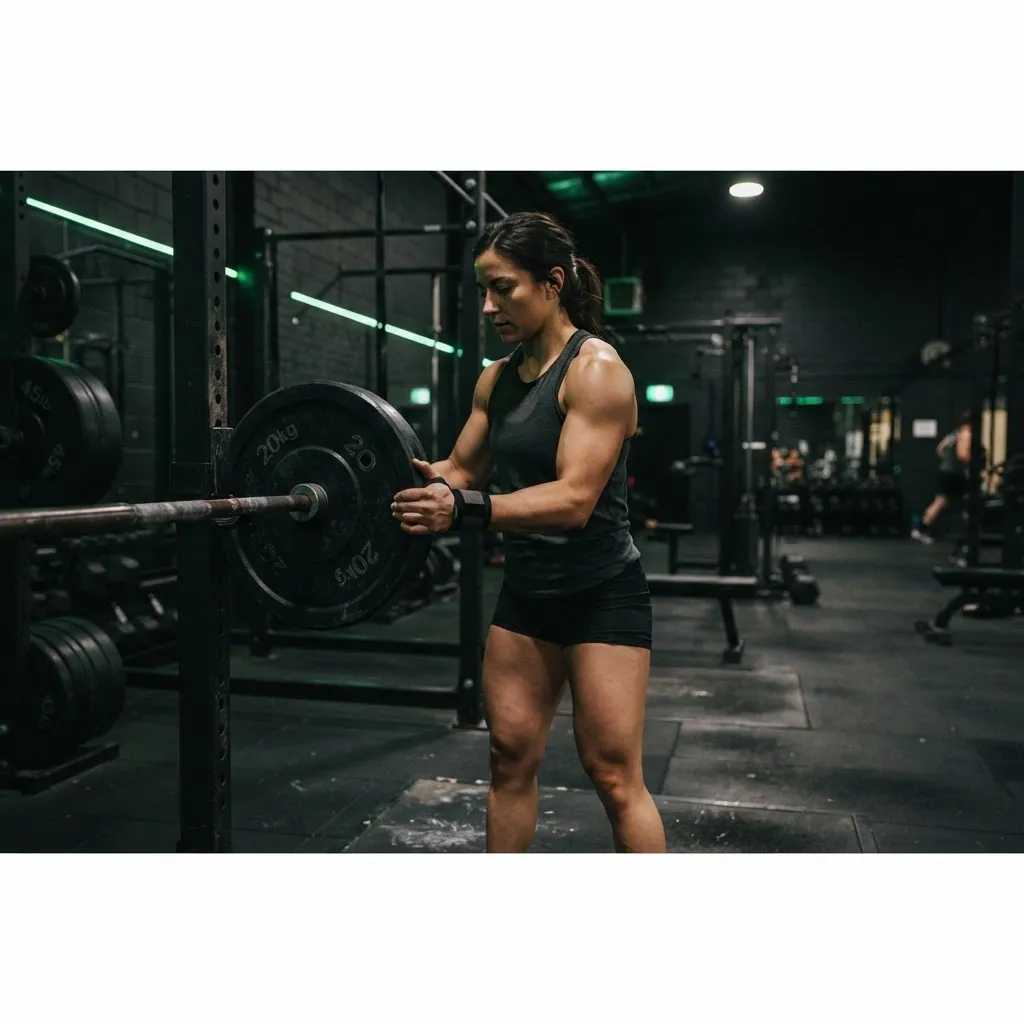
Ask five people at the gym how to build muscle and you'll get five different answers. Eat six meals a day. Never skip leg day. Drink a shake within 30 minutes or the workout was wasted. Most of that you can ignore.
What actually matters is a short list. Lift hard, add a bit more weight or reps over time, eat enough protein and enough food overall, and get your sleep. The rest of this guide goes through each of those.
And stick with it. A decent plan you follow for a year will build far more muscle than a perfect one you drop after three weeks.
How Does Muscle Growth Work?
When you lift something challenging, you put your muscle fibres under tension. That stress is a signal. Over the following day or two, your body repairs the fibres and, if the signal was strong enough, adds a bit of extra protein to them so they handle the load better next time. Repeat that cycle for months and the small additions add up to visible size and strength.
Three ingredients drive the process:
- Mechanical tension: lifting loads heavy enough that the last few reps feel genuinely hard.
- Enough building material: protein from your food, which supplies the amino acids used for repair.
- Recovery time: the actual growth happens while you rest, not while you train.
Miss any one of them and progress slows down. Train hard but eat too little, and there's nothing to build with. Eat well but train lightly, and there's no reason for your body to change.
How to Train to Gain Muscle
You don't need a complicated programme. You need a few principles applied week after week, the same ones backed by the American College of Sports Medicine's position stand on resistance training.
Train close to failure. Most of your working sets should end with only one to three reps left in the tank. If you could have done ten more, the set didn't send much of a signal.
Use progressive overload. Over time, do a little more: an extra rep, an extra set, or a couple more kilos on the bar. Your body adapts to what you ask of it, so what you ask needs to slowly grow.
Pick a sensible volume. Around 10 to 20 hard sets per muscle group per week works well for most people. Beginners grow on the lower end; more experienced lifters often need more.
Hit each muscle about twice a week. Splitting your weekly sets across two sessions tends to work better than cramming them into one, and it lines up with the NHS advice on strength activities to work all major muscles at least twice a week.
Tip
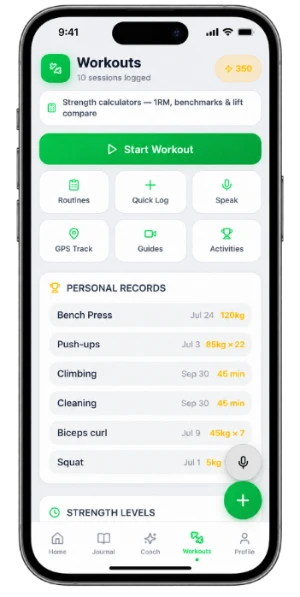
Write your workouts down.
If you can't remember what you lifted last week, you can't beat it.
The workout logger in Navilo Health keeps every set, rep and weight, so you always know your number to beat.
The exact number of reps matters less than you might expect. Anything from about 6 to 20 reps builds muscle, as long as the set is taken close to failure, a pattern also seen in a meta-analysis comparing light and heavy loads. Heavier sets are great for strength, lighter ones are kinder to your joints, and a mix of both works nicely.
How Much Protein Do You Need to Build Muscle?
A practical target for people trying to build muscle is roughly 1.6 to 2.2 grams of protein per kilogram of body weight per day.
That range comes from the International Society of Sports Nutrition's position stand on protein and exercise.
Going much higher than that rarely adds extra muscle, so there's no need to force down endless shakes. What the range works out to for your own weight, and the floor worth clearing if you don't train, are both in the daily protein guide.
📊 Protein calculator
120–165 g protein per day
About 30–41 g per meal over four meals.
Good sources are chicken, fish, eggs, Greek yogurt, cottage cheese, lean beef, tofu, tempeh, lentils and beans, and a protein powder is a convenient food rather than a requirement. High-protein foods has the numbers behind each of them, per portion and per calorie.
If you're vegetarian or vegan, you can build muscle just as well. Plant proteins are usually a bit lower in some amino acids, so mix your sources through the day, like lentils with rice, tofu with whole grains, or beans with bread, and aim for the higher end of your protein range.
🍗 High-protein food database
| Food | Protein / 100 g | kcal / 100 g |
|---|---|---|
| Whey protein powderSupplements | 80 g | 400 |
| Pea protein powderSupplements | 80 g | 390 |
| Casein protein powderSupplements | 78 g | 370 |
| Spirulina (dried)Plant | 57 g | 290 |
| Soy mince (TVP), dryPlant | 50 g | 330 |
| Nutritional yeastPlant | 50 g | 325 |
| ParmesanDairy & eggs | 35 g | 431 |
| Beef jerkyMeat | 33 g | 410 |
| Hemp seedsPlant | 32 g | 553 |
| Chicken breast (cooked)Meat | 31 g | 165 |
| Pumpkin seedsPlant | 30 g | 559 |
| Venison (cooked)Meat | 30 g | 158 |
| Protein bar (typical)Supplements | 30 g | 360 |
| Turkey breast (cooked)Meat | 29 g | 135 |
| Beef steak, sirloin (cooked)Meat | 29 g | 206 |
| Lamb (lean, cooked)Meat | 27 g | 230 |
| Lean beef mince (cooked)Meat | 26 g | 215 |
| Pork tenderloin (cooked)Meat | 26 g | 145 |
| Tuna (canned in water)Fish | 26 g | 115 |
| Chicken thigh (cooked)Meat | 26 g | 209 |
| Tilapia (cooked)Fish | 26 g | 128 |
| PeanutsPlant | 26 g | 567 |
| Seitan (cooked)Plant | 25 g | 150 |
| Peanut butterPlant | 25 g | 588 |
| Sardines (canned)Fish | 25 g | 208 |
| CheddarDairy & eggs | 25 g | 403 |
| Shrimp (cooked)Fish | 24 g | 99 |
| Chicken liver (cooked)Meat | 24 g | 167 |
| Mackerel (cooked)Fish | 24 g | 262 |
| Trout (cooked)Fish | 24 g | 168 |
| Mussels (cooked)Fish | 24 g | 172 |
| Mozzarella (light)Dairy & eggs | 24 g | 254 |
| Cod (cooked)Fish | 23 g | 105 |
| Canned salmonFish | 23 g | 140 |
| Salmon (cooked)Fish | 22 g | 206 |
| HalloumiDairy & eggs | 22 g | 321 |
| AlmondsPlant | 21 g | 579 |
| Ham (lean, sliced)Meat | 21 g | 120 |
| Sunflower seedsPlant | 21 g | 584 |
| TempehPlant | 19 g | 192 |
| Crab (cooked)Fish | 19 g | 97 |
| Smoked salmonFish | 18 g | 117 |
| CashewsPlant | 18 g | 553 |
| Chia seedsPlant | 17 g | 486 |
| Tofu (firm)Plant | 15 g | 144 |
| FetaDairy & eggs | 14 g | 264 |
| EggsDairy & eggs | 13 g | 143 |
| OatsPlant | 13 g | 389 |
| Egg whitesDairy & eggs | 11 g | 52 |
| Cottage cheeseDairy & eggs | 11 g | 98 |
| Quark / skyrDairy & eggs | 11 g | 63 |
| EdamamePlant | 11 g | 121 |
| Greek yogurt (0%)Dairy & eggs | 10 g | 59 |
| Protein puddingDairy & eggs | 10 g | 75 |
| Lentils (cooked)Plant | 9 g | 116 |
| Chickpeas (cooked)Plant | 9 g | 164 |
| Black beans (cooked)Plant | 9 g | 132 |
| Kidney beans (cooked)Plant | 9 g | 127 |
| Wholemeal pasta (cooked)Plant | 5.5 g | 149 |
| Green peasPlant | 5 g | 81 |
| Quinoa (cooked)Plant | 4.4 g | 120 |
| Milk (semi-skimmed)Dairy & eggs | 3.5 g | 47 |
| KefirDairy & eggs | 3.5 g | 55 |
| Soy milkPlant | 3.3 g | 54 |
| BroccoliPlant | 2.8 g | 34 |
Typical values. Check the label of your product for exact numbers.
Most people think they eat more protein than they do. Track it for a week or two and you'll probably be surprised. Snapping a photo of your meals with Navilo Health's photo calorie counter shows your protein for the day without weighing every bite.
What Should You Eat to Gain Muscle?
Beyond protein, your diet should support hard training and recovery. That mostly means eating like a well-fed adult:
- Carbohydrates fuel your sessions. Rice, potatoes, oats, bread, pasta and fruit help you train harder and recover between workouts.
- Fats support hormones and overall health. Olive oil, nuts, seeds, avocado and oily fish are all great.
- Fruit and vegetables bring fibre, vitamins and minerals, and keep digestion happy when you're eating more food.
- Water matters too. Even mild dehydration can make your sessions feel harder.
An easy way to put a meal together: start with a protein, add a carb, add some vegetables or fruit, and a little fat. You don't need a strict meal plan.
Supplements are optional. Creatine monohydrate (3 to 5 grams a day) is the one with strong evidence behind it for strength and muscle. The rest is mostly marketing.
How Many Calories Do You Need to Gain Muscle?
Building new tissue takes energy, so most people gain muscle best in a small calorie surplus: eating around 250 to 500 calories more than you burn each day.
A sensible pace of weight gain is about 0.25 to 0.5% of your body weight per week. Faster than that and a growing share of the gain tends to be fat rather than muscle.
🔥 Calorie surplus calculator
2910 kcal per day
Maintenance is about 2660 kcal. These are estimates, so adjust by your weekly weight trend.
Is it muscle or fat?
The scale can't tell you what the extra weight is, but a tape measure gets you close. Measure your waist at belly-button height, first thing in the morning, once every two weeks. If your weight is creeping up while your waist stays about the same and your lifts keep going up, most of what you're adding is muscle. If your waist grows by more than a centimetre or so for every kilo you gain, you're probably eating a bit more than you need, so trim 100 to 200 calories a day and see how the next few weeks go.
Beginners and people returning after a break can often build muscle while staying at roughly the same weight, sometimes even while losing fat. If that's you, eating around maintenance with plenty of protein is a perfectly good option.
How Important Is Sleep for Muscle Growth?
More than most people think. A lot of the repair work happens while you sleep. After a few bad nights, workouts feel heavier, your appetite goes all over the place and you recover more slowly. I go through simple ways to sleep better in my healthy life hacks guide.
Aim for seven to nine hours a night, in line with the CDC's sleep guidance for adults. A few habits that help:
- Keep a consistent bedtime and wake-up time, including weekends.
- Keep your bedroom dark, cool and quiet.
- Cut off caffeine around eight hours before bed.
- Put your phone down for the last half hour of the day.
Rest Weeks, Warming Up and Dealing With Pain
I ignored all of this for my first couple of years, and I paid for it with a cranky shoulder and a few months off. So here's what I'd tell myself back then.
Take a lighter week now and then
Every six to eight weeks, or whenever everything starts to feel heavy and your joints are grumbling, take a lighter week. People call it a deload. You still go to the gym and do the same exercises, but you drop the number of sets roughly in half and stop well short of failure. Some people also take a bit of weight off the bar.
It can feel like you're wasting a week. You're not. Fatigue builds up quietly, and a lighter week lets it clear so you come back stronger. Most people hit a few personal bests in the weeks right after one.
Warm up properly
You don't need a 20-minute routine. Five minutes of easy cardio to get warm, then a few lighter sets of your first exercise before your working weight, is enough. For a squat at 80 kg, that might be the empty bar, then 40, 60 and 70 kg for a few reps each. If you want full routines for upper and lower body days, I put them together in our guide to gym warm up exercises.
Warm-up sets aren't just for your muscles. They let you check how the movement feels that day. If something feels off on the light sets, it won't feel better when the bar is heavy.
Muscle soreness vs. pain that means stop
Some soreness a day or two after training is normal, especially when an exercise is new to you. It's a dull, spread-out ache that eases once you're moving.
Pain is different. Sharp, stabbing or pinpoint pain, pain in a joint rather than the muscle, or anything that gets worse as the set goes on is a reason to stop that exercise for the day. Don't push through it to finish the workout.
What usually works for minor tweaks:
- Work around it, not through it. Swap to a variation that doesn't hurt, use a lighter weight or a shorter range of motion, and keep training everything else.
- Keep moving. Complete rest is rarely better than gentle movement for small strains.
- Come back gradually. Start well below your old weights and build back up over a couple of weeks.
See a doctor or physiotherapist if pain lasts more than a week or two, keeps coming back, wakes you at night, or comes with swelling, numbness or a joint that gives way. And if something goes "pop" during a lift, stop and get it checked.
Taking it easy for a week feels annoying at the time, but it's nothing compared to sitting out for months.
How Long Does It Take to Build Muscle?
Building muscle is slow, and knowing that up front makes it much easier to stick with.
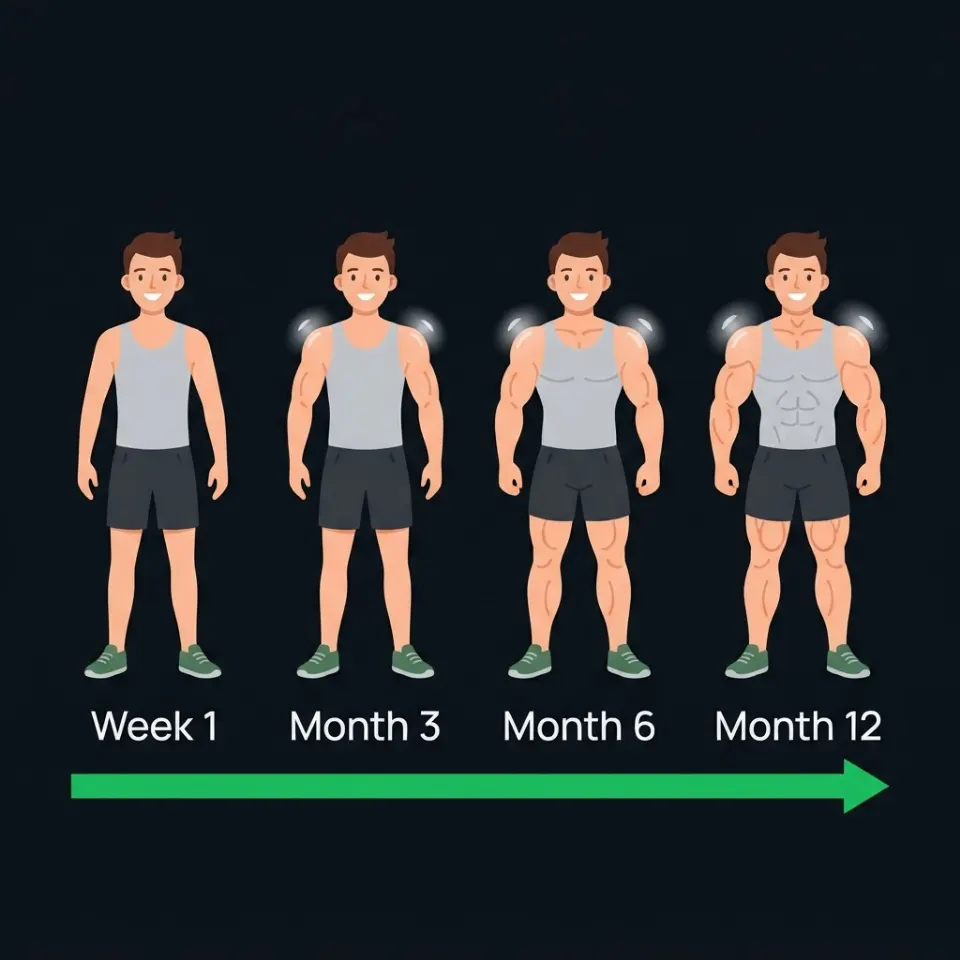
- First few weeks: you'll get stronger quickly, mostly because your nervous system learns the movements.
- Two to three months: visible changes start, and clothes begin to fit differently.
- First year: this is where beginners see their biggest gains. Roughly 0.5 to 1 kg of muscle per month is realistic for many people with good training and nutrition.
- After that: progress continues but slows down. Each year brings smaller, still worthwhile improvements.
Age, sex, genetics and starting point all play a role, so compare yourself with your past self rather than with someone else.
Progress photos and your numbers in the gym tell you more than the mirror does. You see yourself every day, so slow changes are easy to miss.
Building Muscle as a Woman or Starting After 40
For women
Everything in this guide applies to women too. Same principles, same rep ranges, same protein targets per kilo of body weight. Women tend to build muscle a bit more slowly in absolute terms, mostly because they start with less, but the relative gains in the first year are often very similar to men's.
The worry about getting "bulky" by accident is mostly unfounded. Building a lot of muscle takes years of deliberate training and eating, and it doesn't happen from a few heavy sessions a week. What usually happens instead is that you get stronger and your clothes fit a bit differently. Don't be afraid of the heavier weights. Taking sets close to failure matters just as much for you.
For beginners over 40
It's not too late, and starting now is one of the best things you can do. From around your 30s and 40s, people slowly lose muscle if they don't train, and lifting is the most reliable way to slow that down or reverse it.
A few things are worth adjusting:
- Give yourself a bit more recovery. Two or three full-body sessions a week is a great place to start, with at least a day between them.
- Spend a little longer warming up. A few extra light sets make heavy work feel much better on your joints.
- Lean a bit higher on protein. Older muscles respond less to the same amount, so aim for the upper half of your range and around 30 to 40 grams per meal.
- Pick joint-friendly exercises. Machines, dumbbells and goblet squats are often easier to learn and kinder on the body than heavy barbell lifts at first.
- Progress steadily, not fast. Small jumps in weight, added week after week, still add up.
If you have a heart condition, high blood pressure or an old injury, check with your doctor before you start. Then start light and build up.
Common Muscle-Building Mistakes
Most stalled progress comes down to a handful of familiar mistakes:
- Program hopping. Switching plans every couple of weeks means you never stay long enough to progress on anything.
- Not training hard enough. Lots of sets that stop far from failure feel productive but send a weak signal.
- Undereating. Especially common for people who are naturally lean. If your weight isn't moving, you're probably not eating enough.
- Too little protein. Getting close to your daily target is one of the easiest wins there is.
- Skipping legs or back. Training only the muscles you see in the mirror tends to catch up with your posture and joints.
- Ignoring sleep and stress. Your muscles grow between sessions, so poor recovery means slower progress.
- Ego lifting. Heavy weight with sloppy form shifts work away from the muscle you're trying to grow and raises injury risk.
Best Exercises for Building Muscle
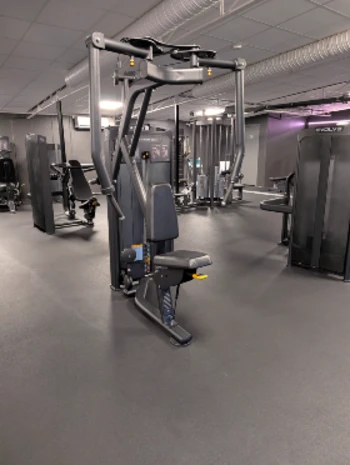 Machines like this pec deck are a safe way to add chest and rear shoulder volume, but the basics below matter more.
You don't need every machine in the gym. A small set of reliable exercises covers the whole body:
- Lower body: squats, Romanian deadlifts, leg press, lunges, hip thrusts, leg curls, calf raises.
- Chest: bench press, incline dumbbell press, push-ups, cable flyes.
- Back: pull-ups or lat pulldowns, barbell or dumbbell rows, seated cable rows.
- Shoulders: overhead press, lateral raises, rear delt flyes.
- Arms: curls, hammer curls, triceps pushdowns, overhead triceps extensions.
Big compound lifts like squats, rows and presses work lots of muscle at once and are great for strength. Smaller isolation exercises let you add targeted volume to muscles that are lagging. A good plan uses both.
Pick exercises you can do with good form and that don't bother your joints, since you'll be doing them for months.
Example Muscle-Building Workout Plan
Here's a simple upper/lower split, four days a week. It hits every muscle twice and fits around work and life. Do 2 to 4 sets of each exercise, taking most sets within one to three reps of failure.
Day 1: Upper
- Bench press: 6 to 10 reps
- Barbell row: 6 to 10 reps
- Overhead press: 8 to 12 reps
- Lat pulldown: 10 to 12 reps
- Curls and triceps pushdowns: 10 to 15 reps
Day 2: Lower
- Squat: 6 to 10 reps
- Romanian deadlift: 8 to 12 reps
- Leg press or lunges: 10 to 15 reps
- Leg curl: 10 to 15 reps
- Calf raise: 12 to 20 reps
Day 3: Rest or light activity, such as a walk or an easy bike ride.
Day 4: Upper with variations: incline dumbbell press, seated cable row, pull-ups, lateral raises, hammer curls, overhead triceps extensions.
Day 5: Lower with variations: hip thrust, front squat or hack squat, walking lunges, leg curl, calf raise.
Days 6 and 7: Rest.
Why You Should Track Your Progress
Muscle grows slowly. From one week to the next you won't see much in the mirror, and that's when a lot of people quit. If you write your numbers down, you can see the progress even when the mirror doesn't show it.
The biggest win is simple: you know when to add weight. If you hit the top of your rep range last time, your log tells you to go heavier, instead of you doing the same workout for months without noticing. It also shows you when a lift has been stuck for three or four weeks, which is usually the moment to look at your sleep or food.
And honestly, it's motivating. Looking back and seeing your squat went from 60 to 90 kg beats any mirror on a bad-lighting day.
What's worth tracking:
- Your main lifts: weight, sets and reps for each exercise.
- Body weight: weigh in a few times a week and look at the weekly average, not single days.
- Measurements: arms, chest, waist and thighs once a month.
- Progress photos: same light, same pose, every four weeks.
- Protein and calories: at least for the first few weeks, until you know your portions.
Compare month to month rather than day to day. Small changes add up over a year.
You can log workouts, weight, meals and progress photos together in Navilo Health, so your strength gains, body weight and nutrition sit side by side in one place.
There's no secret to building muscle. Train hard, eat enough, sleep well and keep at it for months, not weeks. If you want one place to log your workouts, meals, protein and sleep, Navilo Health puts all of it in a single app. Got an idea for how we could make training easier to track? Share it on our feature requests board.
Frequently asked questions
Can I build muscle at home?
Yes. Push-ups, split squats, rows with a backpack or resistance bands, and a pull-up bar can take you a long way. The same rules apply: train close to failure and make it harder over time.
Do I need to bulk to gain muscle?
Not necessarily. Beginners and people coming back after a break can often build muscle around maintenance calories. More experienced lifters usually do better with a small surplus.
Is cardio bad for muscle gain?
No. Moderate cardio supports heart health and recovery. Just avoid doing so much that it eats into your energy for lifting or pushes you into a calorie deficit. A few runs or walks a week is plenty.
Does muscle turn into fat if I stop training?
No, they're different tissues. If you stop training, muscle slowly shrinks, and if you keep eating the same amount you may gain fat. The good news is that regaining lost muscle is much faster than building it the first time.
How much muscle can you gain in a month?
As a beginner with decent training and food, roughly 0.5 to 1 kg a month is realistic in the first year. After that it slows down, and experienced lifters may gain only a few kilos a year.
Should I train when I am sore?
Mild soreness is fine. Warm up and train as normal, and it usually eases once you get moving. If you're so sore that you can't move properly, train a different muscle group that day or go for a walk instead.
Is creatine safe?
For healthy adults, creatine monohydrate at 3 to 5 grams a day is one of the most researched supplements there is and is considered safe. If you have kidney problems or take regular medication, check with your doctor first.
Am I too old to build muscle?
Almost certainly not. People in their 60s, 70s and beyond can build meaningful muscle and strength with regular resistance training, and it's one of the best things you can do for healthy ageing.
Sources
- American College of Sports Medicine (Phillips SM, chair). Resistance Training Prescription for Muscle Function, Hypertrophy, and Physical Performance in Healthy Adults: An Overview of Reviews. Medicine & Science in Sports & Exercise, April 2026.
- NHS. Strength and flexibility exercises. NHS, accessed October 2026.
- Schoenfeld BJ, Grgic J, Ogborn D, Krieger JW. Strength and Hypertrophy Adaptations Between Low- vs. High-Load Resistance Training: A Systematic Review and Meta-analysis. Journal of Strength and Conditioning Research, December 2017.
- Jäger R, et al. International Society of Sports Nutrition Position Stand: protein and exercise. Journal of the International Society of Sports Nutrition, June 2017.
- Centers for Disease Control and Prevention. About Sleep. CDC, accessed October 2026.
Spotted a mistake or an out-of-date number? Tell me and I'll check it.
Report an errorThis article is general information, not medical advice. Talk to a doctor before big changes to your diet or training.
Know someone who'd like this one?
Keep reading
Training
Gym Warm Up Exercises: Warm Ups for a Workout
A simple gym warm-up you can actually stick to: a full-body routine, upper and lower body versions, and the best warm-up exercises for each.

Weight
How to Lose Weight and Keep It Off: A Guide to Lasting Fat Loss
How to lose weight and keep it off: pick a calorie deficit of 300 to 500 a day, track three numbers, and adjust every two to three weeks. Based on research.

Nutrition
How to Count Calories From Photos (and Pair It With a Calorie Calculator)
How photo calorie counting really works, how accurate it is, and how to combine it with a calorie calculator so the numbers actually mean something.
Keep reading
More guides in the same topic.